Traditional Chinese clothing---Tang suit
Tang suit is a kind of Chinese clothing, refers to the Tang Dynasty hanfu, a style in the Clothing system of the Han nationality, characterized by Jiaoling“交领”, Youren“右衽” and Jidai“系带”. On behalf of the Qixiong dress, Tang Yuanlingpao, Jiaoling Ruqun and so on.
Women's dress in the Tang dynasty are generally divided into three types, Run“襦”, Ao“袄”, and shir“衫”t. Ruqun are jacket or cotton-padded clothing with a narrow. Ao longer and shorter than Ru, clothing body is looser, there are also jackets or cotton-padded clothes. Ru and Ao have narrow sleeves and long sleeves. Hanfu is the embodiment of China's "state of etiquette", "Splendid China" and the Country of Seris. It carries the outstanding craftsmanship and aesthetics of the Chinese nation, such as dyeing, weaving and embroidery, and inherits more than 30 Chinese intangible cultural heritage and protected Chinese arts and crafts.
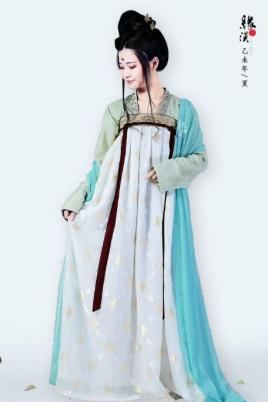
The Tang suit is the Tang Dynasty Hanfu. One is traditional Ruqun, which were generally popular during the early Tang Dynasty and largely followed the traditional Shangyixiashang“上衣下裳” by Chinese women since the Eastern Han Dynasty. People always talk about the word "Yishang", in fact, Yi and Shang is different, Yi are worn on, Shang actually refers to the modern dress, Yi and Shang are separated. This kind of women's dress, which was worn in two pieces rather than one piece, continued until the end of the Ming Dynasty. The dress is worn basically by making the Youren“右衽” Jiaoling or the Jidai is worn with a knot, and the dress below is surrounded by long ribbons, the coat or tucked in or naturally loose, later this loose coat is constantly lengthed and down to the knees, and later develops Bezi of Ming Dynasty.
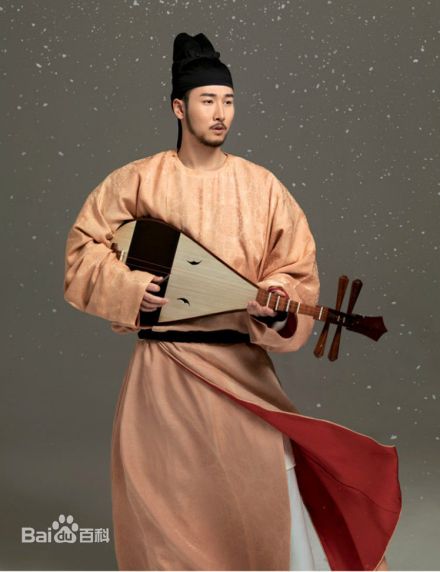
The frock was draped directly over it, and the frock was very gorgeous, and basically it was dragged to the ground, some a few meters long, for example, with sleeves four feet wide, and the dress to five feet, so that, as later in Europe, a woman's status was determined by the length of the hem. Smocks generally have wide sleeves, which is the wide sleeves that people often see. In the Tang Dynasty, wide sleeves were basically in the shape of square pieces, similar to today's kimono sleeves. There was another kind of dress in the late Tang dynasty, which was written by royal wives.
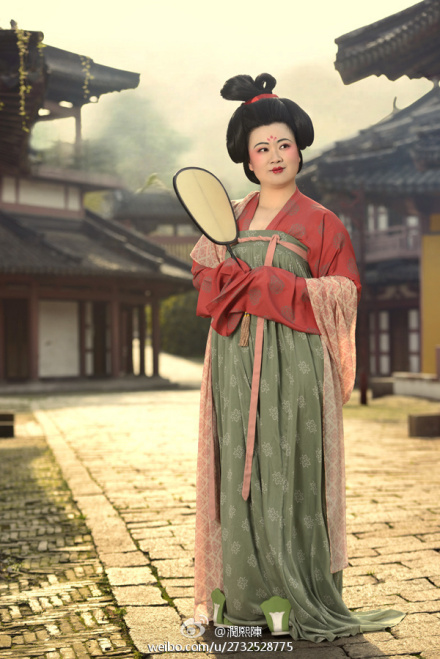
In near period, strengthened the Chinese traditional aesthetic idea, in the clothing began to restore ancient ways, give priority to in order to show women's figure from returning to the qin and han dynasties that clothes big sleeve, elegant, such as the style of fairy, 'loose and more fat, the style of the late type have been affect the basic idea of Chinese women's clothing, is comfortable with hypertrophy, which naturally in later became the object of the moral codes required, Soft and natural, invisible without desire.
In the middle and late Tang dynasty, women's clothing is gorgeous and magnificent, generally similar to a formal dress. They wear strapless directly inside -- strapless was originally underwear, which was combined with skirt to form a whole in the Tang Dynasty. It does not tie a belt, so it is loose and natural. It is a further proof of the transition of women's dress in the middle and late Tang Dynasty to the ancient ceremonial dress. This style is a layer of dress, with many layers and heavy drags, which is very troublesome to wear.
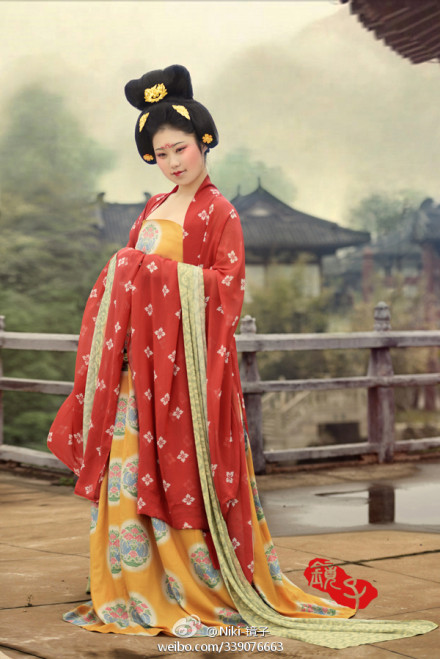
First of all, put on a lot of layers of wide-sleeve blouse, layer upon layer, and then put on a great heavy dress, that is, the famous "tang dress", and then put on a wide wide-sleeve blouse outside, although cumbersome, but give a person a sense of calm, with a sense of layers.
It is worth mentioning that Japan's famous ancient palace kimono "12 single" is evolved from this dress. The Japanese call it "Tang Clothing", which is the clothing from the Tang Dynasty. The style basically hasn't changed much, but some Japanese national characteristics are added to the style.
The Tang Dynasty hanfu includes the Tang Dynasty Hanfu and a modern hanfu developed and restored according to the shape and structure of the Tang Dynasty Hanfu.
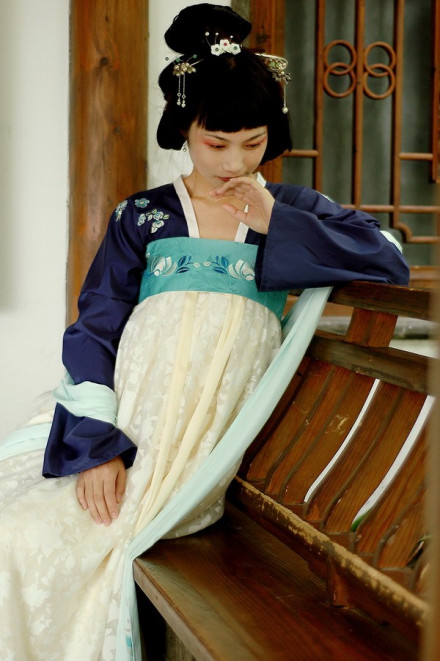
Ru
It is a kind of jacket or cotton coat with narrow and short body.
Ao
Ao are longer and shorter than robes, with looser jackets or cotton-padded jackets. Ru and Ao have narrow sleeves and long sleeves.
shirt
It is a sleeveless singlet, which is used to absorb sweat. It has two kinds:Duijin and Youren.
Square piece of skirt “方片裙”
The style is rigid and rigid, so it does not look beautiful on women. Therefore, in the Tang Dynasty, the skirt style of high waist and chest, wide and sweeping the floor was popular, which could not only show the curvaceous beauty of human body structure, but also show a rich and natural and graceful demeanor.
The structure of the skirt must be adapted to the main structure of the human body, so it is a multi-pleated skirt, or flared skirt, with a circular hem.
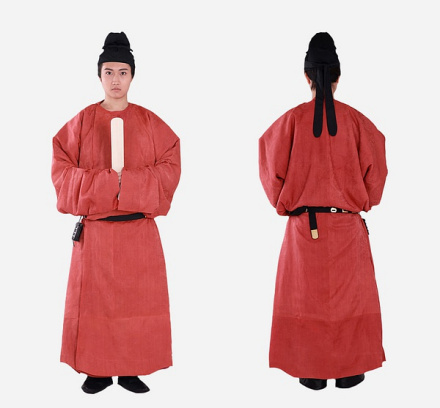
There are round collar, square collar, diagonal collar, straight collar , etc.
Short Ru dress
The characteristic is that the skirt waist is tied higher, generally above the waist, and some even under the armpit, giving a kind of beautiful slender feeling.
Tang Dynasty dress color is gorgeous, red, purple, yellow, green, especially the red dress . The popular red dress on the street is not the patent of modern people, as early as in the high Tang Dynasty, It's already very popular.
Perhaps influenced by the theory of Yin and Yang and the five elements, Yang guifei likd yellow dresses best, which were a status symbol.
The Tang dynasty hanfu is mainly divided into
1:襦裙-Ruqun
2:唐代大袖衫--Large sleeves of tang Dynasty
6:改良唐装(唐代服饰)--Improved Tang Suit (tang Costume)
If reproduced, please indicate the original from the HanfuClub


评论
发表评论